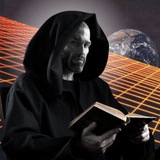
The Hermetic Gate Giuliano Kremmerz A brief overview of the esoteric system developed by Hermetic initiate and Ur Group associate Giuliano Kremmerz, this work outlines the "Integral Science" of Hermeticism as a perennial philosophy transcending the intellectual fashions of modern science, religion and spirituality. As the author explains, his intention for the present work is "to outline a course of study and, above all, the program... Integral Science, stripped of the practical aspects and the astonishing stories and speculations of all those who today engage in poetic theologies across all musical themes—to the realm of established science—must not delude us into thinking it is an easy panacea of miracles, nor make us forget the purpose of our research." https://tradition.st/the-hermetic-gate/
Open in TelegramTradition Publishing Co.
Publisher of traditionalist, reactionary, and classical literature. Visit our website at https://tradition.st or follow @TraditionBooks on IG and Twitter for updates.
Subscribers, 30 days
Nov 23 – Nov 24−2 (−0.1%)
Show as table
| Date | Subscribers |
|---|---|
| Nov 23, 2026 | 2,146 |
| Nov 24, 2026 | 2,144 |
Average views per post by day
By publication day
Show as table
| Date | Avg views per post |
|---|---|
| Nov 7, 2026 | 463 |
| Nov 8, 2026 | 1,850 |
Latest posts
Sacred Lines Various authors The existence of "ley lines" was first described in 1921 by the Englishman Alfred Watkins. In Germany, Wilhelm Teudt and Josef Heinsch had reached the same conclusions as Watkins regarding the position of ancient large-scale structures, referring to the mysterious alignments as "sacred lines." Heinsch theorized that "the German landscape, in its primeval sacred spatial order, presents a vast, comprehensively unified hieroglyph." The study of geomantic and astronomical orientations among the ritual centers of pagan Germany was a topic of great interest for scholars working under the Ahnenerbe, which published research on ley lines, earth mysteries, and related subjects in the periodical Germania. The selection of articles presented in this volume is taken entirely from issues of Germania, with the exception of an essay by Heinsch written as an associate member of the Ahnenerbe. https://tradition.st/sacred-lines/
Open in TelegramGALLERY UPDATES Several new pieces have been added to our gallery, and prices have been significantly reduced for all posters. In addition, we have acquired new technology to scale and edit the images, which produces much higher quality results. More updates will be coming soon. https://tradition.st/gallery/
Open in TelegramAriosophic Kabbalah Herbert Reichstein Herbert Reichstein (1892 -1944) was an author and publisher of esoteric and ariosophical writings. He worked closely with Jörg Lanz von Liebenfels from the mid-1920s onwards, and the publications of Guido von List are considered to have been an important influence on his thought. In the fall of 1925, he came into contact with members of a Berlin occult group known as the "Swastika Circle," which brought together various esoteric teachings such as chiromancy and astrology. It was around this time that Reichstein began cooperation with Jörg Lanz von Liebenfels for the publication of his work. With the help of Reichstein, von Liebenfels published “The Ariosophical Kabbalah of Names and Places” in 1926. Based on this work, Reichstein felt inspired to write a “Practical Handbook of Ariosophical Kabbalism,” translated here into English under the title "Ariosophic Kabbalah." https://tradition.st/ariosophic-kabbalism/
Open in TelegramPhenomenology of the Absolute Individual Julius Evola “Theory and Phenomenology of the Absolute Individual,” written by Evola between 1917, when he was called up for military service, and 1924, when he was in Rome and had by then turned his attention to other subjects (art, Eastern doctrines, esotericism), consisted of “300 protocol-format pages, four-fifths of which were handwritten.” The work was published in two volumes, first the “Theory” (1927), then the “Phenomenology” (1930). After World War II, during his time at the military hospital in Bologna (1948–1951), Julius Evola synthesized and updated "Theory," which was published only in December 1973 and in a critical edition in this series in 1998; however, he did not perform the same revision for "Phenomenology," which appeared in its original draft in early 1974, a few months before his death. The edition presented here is thus still the 1930 edition, with typographical errors corrected. https://tradition.st/phenomenology-of-the-absolute-individual/
Open in TelegramThe Magic Scroll J. M. Eggertsson The Magic Scroll (alternate title: Sorcerer's Screed) is a remarkable collection of magic, folklore and spellcraft from the ancient Nordic tradition. It features the largest known collection of Icelandic magical staves, or galdrastafir, including descriptions of each stave and detailed instructions for their use. The book contains protective symbols, healing charms, love spells, curses, weather magic and other folk beliefs that were preserved in the Icelandic grimoires, as well as in oral tradition. It thus offers a rare insight into the darker, stranger and more mysterious side of ancient Nordic religion and spirituality. https://tradition.st/the-magic-scroll/
Open in TelegramThe Principles of Fascism Various authors What is Fascism? Modern opponents of this ideology have misrepresented it to such a degree that few people now understand what Fascism truly means. With the intention of clarifying such misconceptions, this anthology offers a precise and uncontestable definition of Fascism according to official documents from the National Fascist Party of Italy. Comprising over thirty articles, speeches and essays by such prominent Fascist thinkers as Mussolini, Gentile, and Scaligero, this selection covers the full range of topics essential to a correct understanding of Fascism and its place in the modern world. https://tradition.st/the-principles-of-fascism/
Open in TelegramNEW EDITION Essays Julius Evola Presented here for the first time in English, this anthology includes a diverse assortment of material that showcases the breadth and depth of Evola's insight on subjects ranging from traditional esotericism and mythology to politics and the modern world. These essays and articles were originally published in various Italian and German newspapers, journals, periodicals and anthologies, but most (if not all) have never been translated into English until now. Of particular interest are Evola's writings on Thule and Agarttha, the Nephilim of Gnostic theology, the SS and secret societies, Roman traditions of sacred kingship, and the Tibetan afterlife, to name a select few. Containing a total of 33 brief essays and two letters, this collection represents an introductory overview of Evola's thought on a number of subjects about which he wrote more extensively in his long-form work, as well as some which are discussed nowhere else in his writings. https://tradition.st/essays/
Open in TelegramCracks in the Great Wall Charles Upton Cracks in the Great Wall analyzes of the findings of UFO researcher Jacques Vallee and some of his colleagues in light of the teachings of René Guénon, particularly as expressed in his prophetic masterpiece The Reign of Quantity and the Signs of the Times. According to Guénon, one of the signs of the End Times is the erosion of the energy barrier or ”Great Wall” between the material plane and the world of subtle realities — which is why our world is now being invaded by ‘infra-psychic forces’ of a terribly destructive nature. Author Charles Upton shows how one of the most obvious examples of this invasion is the UFO phenomenon, including the experience of alien abduction. A lifetime student of comparative religion and mysticism, he explains the true nature of UFOs, the quality of the world they come from, and also something about the agenda these beings, or some of them, are trying to impose upon our world. https://tradition.st/cracks-in-the-great-wall/
Open in TelegramGermanic Sanctuaries Wilhelm Teudt Did the Germanic peoples already have their own advanced culture before coming into contact with the Romans and the West Franks? In his magnum opus Germanic Sanctuaries, first published in 1929, Wilhelm Teudt attempts to find archaeological evidence for an advanced Germanic civilization. Teudt’s research focuses on the area southwest of Detmold, known as the Osningmark. He hypothesized that the Externsteine found there were a Germanic place of worship or a so-called “solar observatory.” Teudt's theories met with considerable resistance and were rejected by the academic community from the outset, yet they continue to influence esoteric and neo-pagan circles to this day. Richly illustrated with over 80 photographs, drawings, maps, and sketches. A completely revised new edition of the 1931 edition. https://tradition.st/germanic-sanctuaries/
Open in TelegramConnections
Similar channels
- خالد بريه@khalidburehBooks2.14K
- море и книги || Лина 📚🌅@more_i_knigiBooks2.15K
Мысли филолога@philoughtsBooks2.14K
Набоков и прочие. Литература без пиетета@knyazprocentBooks2.15K
Культурный центр «Франкотека» | Библиотека иностранной литературы@francoteka_libflBooks2.14K
Борисовна, ты была права🔞@borisovnatvBooks2.14K
СеВер_БУК@sever_booksBooks2.16K- Ето Луиза 🧸🍂@luiza_inbooksBooks2.16K