AI ChatbetaAccount

Occult of Personality

Esoteric podcast extraordinaire

Username
@occultofpersonality
Category
Esoterics
Subscribers1,6380 in 1 day
Avg views per post, 7d591+80.7% vs prev 7d
ERR36.08%last 7 days

Subscribers, 30 days

Nov 23 – Nov 240 (0%)

Show as table
DateSubscribers
Nov 23, 20261,638
Nov 24, 20261,638

Average views per post by day

By publication day

Show as table
DateAvg views per post
Oct 29, 2026366
Oct 30, 2026347
Oct 31, 2026395
Nov 3, 2026378
Nov 5, 2026337
Nov 6, 2026320
Nov 8, 2026300
Nov 11, 2026953
Nov 13, 2026257
Nov 14, 2026220
Nov 15, 2026212
Nov 17, 2026224
Nov 20, 2026591

Most viewed this month

  1. 01
    Views953
    Forwards—
    Reactions4
    Comments—
  2. 02
    Views591
    Forwards—
    Reactions4
    Comments—
  3. 03

    No text

    Photo
    Views438
    Forwards—
    Reactions—
    Comments—
  4. 04

    No text

    Photo
    Views402
    Forwards—
    Reactions—
    Comments—

Latest posts

#2173Link preview
Views591+66%vs avg
Forwards—
Reactions4
Comments—
Views growthHide views growth

Views growth

Hours after publication

Show as table
Hours after publicationViews
0 h0
61 h554
67 h591
  1. Total to date591
#2171Photo
Views224−37%vs avg
Forwards—
Reactions2
Comments—
#2170Text

From 1628, Comenius and Andreae established an exchange of correspondence, which accompanied the sending of Comenius’s Christianae Societatis Imago (1620) with a commentary that evoked both the “ludibrium” of the Fama Fraternatis and its efforts, engaged as early as 1614, to create a true societas christiana, with the purpose of “cleaning the Augean stables”. Having been prevented from achieving this vast project, Andreae suggested to Comenius, in a letter of 16 September 1629, that he pick up the torch and promote an authentically Christian pansophy, one that is thus not content to ally the creator God with nature-philosophy. Comenius was indeed strongly subject to J.V. Andreae’s influence, to the point of repeating in his Labyrint sveta a raj srdce (Labyrinth of the World and Paradise of the Heart), composed in 1622/23, entire passages from Peregrini in Patria errores. However, he granted the Christianization of pansophy a much broader sense in his plan to establish a universal alliance of Men of good will. His Panegersia aspired to the creation of a “Collegium Lucis ad fundandam Ecclesiam vere Catholicam philadelphiam” whose prelude he saw in the Rosicrucian brotherhood. In his Pansophiae templum ad ipsius supremi Architecti, Omnipotentis Dei ideas, normas legesque extruendum, Comenius divided pansophy into seven parts, making it possible for the mind to pass through successive stages from the knowledge of nature to the contemplation of the supreme God." Roland Edighoffer, DGWE, p.269-271 #Rosicrucianism

Open in Telegram
Views247−31%vs avg
Forwards—
Reactions—
Comments—
#2169Text

Remembering Jan Amos Comenius (Komenski) (1592-1670), the great Czech teacher and Rosicrucian sympathizer, on the anniversary of his passing. "Comenius’ family belonged to the Fraternity commonly known as the Moravian Brothers and named Jednota Bratska in Czech, that is, Unity of Brethren. From the 15th century, this ecclesiola had greatly developed despite persecutions, and it had received some of the Vaudois driven out of Brandenburg. After studying Latin and theology, Comenius went to Hess, in Herborn, then to the Palatinate, in Heidelberg, and experienced the double influence of Calvinism and the millenarianism professed notably by Johann Heinrich Alsted. Returned in 1614 to Moravia, Comenius was ordained pastor in 1616 and got married. However, the victory of Tilly, commander of the Catholic League, at the White Mountain, over the Bohemian army commanded by the Palatine Frederick V – the Winterkönig, king of Bohemia for a single winter (1619-1620) – would change the course of Comenius’s life. Having lost his wife and children, he was henceforth constrained to lead a wandering life throughout Europe. In 1624, an imperial edict issued a ban on all non-Catholic priests and forced Comenius to take refuge in Lissa, on the Silesian border, where he could enjoy the protection of the powerful family of the Lezcynski. He was able to remain there until 1641, surrounded by a community of Moravian Brothers, of whom he was the bishop. It was there that his passionate interest in problems of pedagogy developed, which manifested in writings such as Janua linguarum reserata or Didactique, Conatuum Comenianorum Praeludia and Conatuum pansophicorum dilucidatio. Invited to London by Samuel Hartlib in 1641, he traveled to Sweden the following year, then to Elbing in Prussia. In 1643, Comenius published Irenica quaedam scripta pro pace ecclesiae, an ecumenical work before the term existed. After the peace of Westphalia, he fell under the influence of a visionary and went to Hungary with the idea of establishing a Schola Pansophica there. If he did not succeed in this, he at least completed an encyclopedic collection under the title Orbis sensualis pictus and an innovative method of teaching languages entitled Scholus ludus seu encyclopedia viva. During the many conflicts between Poland and Sweden, Comenius, who had returned to Lissa, suddenly had to leave this city captured and destroyed by the Polish, because he had sided with the king of Sweden. He spent the last years of his life in Amsterdam and further published his Opera didactica omnia (1657), De irenico irenicorum (1660) and his beautiful literary testament Unum necessarium in 1668. "Of the many works by this man of an often-tragic destiny, and beyond his priestly activities with the Moravian Brothers, we mainly retain his pedagogical innovations partly inspired by Ratichius (Wolfgang Ratke, 1571-1635). In fact, his interest in didactics was only a means for him to arrive at the “general reform of the world” through “pansophy”, that is, a total science, universal knowledge making it possible to decode the “signatures” of the divine realities inscribed in the concrete world. Now, these ideas preoccupied a number of minds in the first half of the 17th century. The Vier Bücher vom wahren Christentum, completed in 1610 by Johann Arndt, and the different plans for Christian society proposed by the celebrated Swabian theologian Johann Valentin Andreae (1586-1654) after the vogue of the Rosicrucian myth, aimed to “reform the Reformation” toward a pansophic Christianity. The utopian story of Christianopolis, published by Andreae in 1619, described its pedagogical program. It is thus not surprising that Comenius should have seen himself as a disciple of Andreae who, according to him, had been able in his writings both to detect the ills from which the Church, the State and culture were suffering, and to suggest the appropriate remedies. Comenius had read the main works published by Andreae between 1616 and 1619.
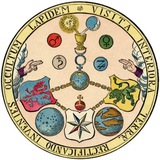
Open in Telegram
Views220−38%vs avg
Forwards—
Reactions—
Comments—
#2166Text

Forwarded from Jackson Peterson - Dzogchen and Advaita 😃

Here are the main quotes that show how much closer Nisargadatta came to the Buddhist view towards the end of his life. He actually turned his entire teaching upside down... Nisargadatta: "The ‘I am’ is a thought, while awareness is not a thought; there is no ‘I am aware’ in awareness. Consciousness is an attribute while awareness is not, one can be aware of being conscious, but not conscious of awareness." Another from Nisargadatta: "All hangs on the idea ‘I am’. Examine it very thoroughly. It lies at the root of every trouble. This ‘I am’ idea was not born with you. You could have lived very well without it. It came later due to your self-identification with the body. It created an illusion of separation where there was none. It made you a stranger in your own world alien and inimical. Without the sense of ‘I am’ life goes on. There are moments when we are without the sense of ‘I am’, at peace and happy. With the return of ‘I am’, trouble starts." "It is because the ‘I am’ is false that it wants to continue. Reality need not continue – knowing itself indestructible, it is indifferent to the destruction of forms and expressions. To strengthen and stabilize the ‘I am’ we do all sorts of things – all in vain for the ‘I am’ is being rebuilt from moment to moment. No ambition is spiritual. All ambitions are for the sake of ‘I am’. If you want to make real progress you must give up all ideas of "I am". "Immortality is freedom from the feeling: ‘I am’. Yet it is not extinction. On the contrary, it is a state infinitely more real, aware and happy than you can possibly think of. Only self-consciousness is no more. Who would remain even to say ‘I am the witness’? When there is no ‘I am’, where is the witness? In the timeless state there no self to take refuge in." Quotes of Nisargadatta Maharaj from “I am That”. "There is nothing happening - nobody is bound - therefore, there is no question of liberation. It is only when one thinks of himself as an individual that he thinks of bondage and liberation." --Nisargadatta Maharaj "The self-styled gurus talk of ripeness and effort, of merits and achievements, of destiny and grace; all these are mere mental formations, projections of an addicted mind. Instead of helping, they obstruct".---Nisargadatta Maharaj--- Q: I am tired of all the ways and means and skills and tricks, of all these mental acrobatics. Is there a way to perceive reality directly and immediately? M: Stop making use of your mind and see what happens. Do this one thing thoroughly. That is all. (Nisargadatta, dialogue 43.) "When you believe yourself to be a person, you see persons everywhere. In reality there are no persons, only threads of memories and habits. At the moment of realization the person ceases." Nisargadatta

Open in Telegram
Views257−28%vs avg
Forwards—
Reactions6
Comments—
#2164Photo
Views300−16%vs avg
Forwards—
Reactions5
Comments—

All posts

Connections