Кабинет
Marwa Osman/MidEaStream

Marwa Osman/MidEaStream

Mother of Three | Ph.D | Journalist & TV Show Host for @PressTV @MidEaStream |University Lecturer |Political Commentator | 🐦@Marwa__Osman | 📸 Marwa_Osman1

Юзернейм
@marwa_osmanlb
Категория
Политика
Создан
, 4 года
Подписчики11 369−7 за 1 день
Просмотров на пост, 7 дн.2 435−62,5% к пред. 7 дн.
ERR21,41 %за 7 дней

Подписчики, 30 дней

15 нояб. – 16 нояб.−7 (−0,1%)

Показать таблицей
ДатаПодписчики
15 нояб. 2026 г.11 376
16 нояб. 2026 г.11 369

Средние просмотры поста по дням

По дню публикации

Показать таблицей
ДатаПросмотров на пост
18 окт. 2026 г.5 782
21 окт. 2026 г.3 193
23 окт. 2026 г.2 001
24 окт. 2026 г.2 425
26 окт. 2026 г.4 653
27 окт. 2026 г.3 223
4 нояб. 2026 г.6 615
5 нояб. 2026 г.6 387
14 нояб. 2026 г.5 057
15 нояб. 2026 г.1 124

Самые просматриваемые за месяц

  1. 01
    Просмотры6,62 тыс.
    Пересылки92
    Реакции227
    Комментарии—
  2. 02
    Просмотры6,39 тыс.
    Пересылки55
    Реакции169
    Комментарии—
  3. 03
    Просмотры5,78 тыс.
    Пересылки90
    Реакции217
    Комментарии—
  4. 04

    9. What about the institutional differences? Here, there is a more meaningful contrast. Eisenkot is generally associated with a more conventional, institutionally minded security establishment. Netanyahu, meanwhile, has repeatedly clashed with Zionist Israel's judiciary and other institutions, particularly when their actions have threatened his political interests. Eisenkot is also more palatable to many Western governments: a familiar security establishment figure who can speak the language of diplomacy, institutional stability, and strategic predictability. Netanyahu, by contrast, has become an increasingly polarising figure, even among some of Israel's traditional international partners. Their political alliances reflect the distinction. Eisenkot is associated with the centre-right and liberal-right, while Netanyahu depends heavily on ultra-nationalist and religious-right factions. 10. So what's the bottom line? Think of it as two competing brands selling broadly overlapping strategic priorities. One comes in a tailored suit, delivers polished talking points, and reassures Western capitals that everything is under control. The other is more openly combative, politically abrasive and less concerned with making the project look respectable. One understands the value of public relations. The other often makes the headlines for all the wrong reasons. But let's not confuse presentation with substance. A politician can defend the same underlying power structure in impeccable English and still be defending that power structure. 11. And if neither camp secures 61 seats? Netanyahu could remain caretaker prime minister while negotiations continue. If no viable coalition emerges, Zionist Israel could face prolonged political paralysis and potentially another election. So by all means, follow the election. Just don't mistake a contest between different shades of the Israeli right for a referendum on Palestinian freedom. Sometimes the most important political question isn't who wins the election. It's who never gets a meaningful choice in the first place. Always remember...dismantle terrorist Israel.

    Текст
    Просмотры5,11 тыс.
    Пересылки43
    Реакции97
    Комментарии—
  5. 05
    Просмотры5,06 тыс.
    Пересылки169
    Реакции163
    Комментарии—

Новые посты

#5814Текст
Просмотры684−82%к среднему
Пересылки20
Реакции71
Комментарии—
Динамика просмотровСкрыть динамику

Рост просмотров

Часов после публикации

Показать таблицей
Часов после публикацииПросмотры
0 ч0
1 ч205
16 ч684
  1. Через 1 час205
  2. Всего сейчас684
#5813Текстизменён
Просмотры1 563−58%к среднему
Пересылки22
Реакции71
Комментарии—
#5812Фото
Просмотры5 057+36%к среднему
Пересылки169
Реакции163
Комментарии—
#5811Текст
Просмотры6 387+72%к среднему
Пересылки55
Реакции169
Комментарии—
#5810Текст
Просмотры6 615+78%к среднему
Пересылки92
Реакции227
Комментарии—
#5809Фото
Просмотры3 223−13%к среднему
Пересылки18
Реакции134
Комментарии—
#5807Текст

9. What about the institutional differences? Here, there is a more meaningful contrast. Eisenkot is generally associated with a more conventional, institutionally minded security establishment. Netanyahu, meanwhile, has repeatedly clashed with Zionist Israel's judiciary and other institutions, particularly when their actions have threatened his political interests. Eisenkot is also more palatable to many Western governments: a familiar security establishment figure who can speak the language of diplomacy, institutional stability, and strategic predictability. Netanyahu, by contrast, has become an increasingly polarising figure, even among some of Israel's traditional international partners. Their political alliances reflect the distinction. Eisenkot is associated with the centre-right and liberal-right, while Netanyahu depends heavily on ultra-nationalist and religious-right factions. 10. So what's the bottom line? Think of it as two competing brands selling broadly overlapping strategic priorities. One comes in a tailored suit, delivers polished talking points, and reassures Western capitals that everything is under control. The other is more openly combative, politically abrasive and less concerned with making the project look respectable. One understands the value of public relations. The other often makes the headlines for all the wrong reasons. But let's not confuse presentation with substance. A politician can defend the same underlying power structure in impeccable English and still be defending that power structure. 11. And if neither camp secures 61 seats? Netanyahu could remain caretaker prime minister while negotiations continue. If no viable coalition emerges, Zionist Israel could face prolonged political paralysis and potentially another election. So by all means, follow the election. Just don't mistake a contest between different shades of the Israeli right for a referendum on Palestinian freedom. Sometimes the most important political question isn't who wins the election. It's who never gets a meaningful choice in the first place. Always remember...dismantle terrorist Israel.

Открыть в Telegram
Просмотры5 111+38%к среднему
Пересылки43
Реакции97
Комментарии—
#5806Фото

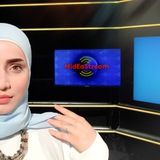
Let's make this ridiculously simple, because you can watch hours of coverage major media outlets and still miss the bigger picture. The political circus is entertaining, but the underlying reality is far less complicated than the pundits would have you believe. 1. Who is competing to become the Israeli occupation's next prime minister? The two main figures are Benjamin Netanyahu and Gadi Eisenkot, the former chief of staff of the Israeli military. 2. How do you become prime minister of the occupation entity? Your political bloc needs 61 seats in the 120-seat Knesset to command a parliamentary majority. 3. Will either side win 61 seats on Tuesday? That looks difficult. Eisenkot's camp might win around 56 seats, while Netanyahu's could secure approximately 50. Those are projections, not certainties, but the point is that neither side may have enough seats to govern alone. 4. And if nobody gets 61? Welcome to coalition politics: the art of turning an electoral stalemate into a government by making deals with smaller parties. 5. How does that work? You recruit smaller factions to help you reach 61 seats. In exchange, they demand cabinet positions, political concessions, funding, and influence over government policy. Apparently, principles are negotiable when there is a ministerial portfolio on the table. 5. What about the so-called "Arab parties"? Arab citizens account for roughly two million people in the Palestinian occupied territories known as Israel, and Arab parties could win between 10 and 14 seats. 6. So why don't they hold the balance of power? Because both major camps simply loath them. Netanyahu rejects such a partnership, while Eisenkot has shown little willingness to embrace it, wary of the political backlash. And that tells you something important about the limits of Israeli entity political inclusion. 7. Why is the Israeli political landscape so far to the right? Because Netanyahu has helped transform it. There was a time when the Israeli left had a meaningful political presence, at least nominally supporting negotiations, the possibility of a two-state solution, and certain rights for Palestinian citizens of Israel. That political current has been progressively marginalised. Netanyahu did not create every strand of Israeli entity nationalism, but he has spent decades normalising and consolidating a political culture in which the right dominates the national conversation. It is being referred to as "Netanyahuism": a political legacy that could outlive Netanyahu himself. The result? An electoral contest increasingly fought not between fundamentally opposing visions of peace and occupation, but between competing factions of the Israeli entity right. On one side, Netanyahu and his hard-right, religious-nationalist allies, including Itamar Ben-Gvir and Bezalel Smotrich. On the other, figures such as Eisenkot and Naftali Bennett, representing different shades of the centre-right and liberal-right. In other words, the argument is increasingly about who gets to manage the system, not whether its fundamental direction should change. 8. So, is there really a difference between Netanyahu and Eisenkot? Yes, but not necessarily where Palestinians would want it to be. Both operate within a political framework that has failed to deliver Palestinian self-determination. Both have taken positions at odds with meaningful Palestinian sovereignty, and both support security strategies that treat Iran and Hezbollah as major adversaries. Their approaches to settlements, annexation, and the Palestinian question are not identical in every detail, but neither should be confused with a champion of Palestinian liberation. The distinction matters. So does the context. More below👇🏻
Открыть в Telegram
Просмотры4 194+13%к среднему
Пересылки46
Реакции64
Комментарии—
#5805Текст

Salam comrades. Please take this weekend to do some simple security cleanup for your family. This week was kind of a turning point for AI and cyber security, and a lot of my friends are not aware of any of it, so I don't want to bore you with the specifics after I bored a good friend of mine who helped me better understand the gravity of the situation, but there were many cyber security issues that impacted many websites this week and it seems we are at a tipping point where open source AI models can be used by bad actors (cough *Israel* cough) to deploy agents and try to do brute force attacks or DDoS attacks or otherwise hack your data. Basically, what happened was that Quest Diagnostics was hit..it has 100 million patient records. MANY other sites were also hit. I recently learned that Quest Diagnostics is the world's leading provider of diagnostic information services, including clinical laboratory testing, routine and specialized blood work, molecular and genetic diagnostics, and pathology. It is not a reason to freak out, but I do think there are some simple things that you should do ASAP to minimize your exposure risk. So here are some suggestions on how to do that thanks to my dear cybersecurity expert friend. So, first set up a password manager...like one password. Give your spouse or partner access to a shared vault. Teach them how to use it. Learn how to use it yourself. Google it. Then update your passwords for all of your critical stuff. Like your email account, your bank or financial stuff. Store it in your password manager. Use the strongest password that you can make up. I know it's a little bit annoying, but it's worth it. Third, use two factor authentication for everything you can. SMS is not ideal (for obvious reasons), although it's better than nothing, but Google authenticator or a passkey is better. A hardware key is the safest, but you're probably not going to do that. You can also add a SIM pin to your phone. It makes it harder to do a SIM jack. If they get to your phone, they get access to all kinds of other things. (new anxiety trigger unlocked)🫠 Update your phone and your computer to the newest releases. Turn auto update on. Freeze your credit/visa card (very important) until you fix all your passwords. That takes five minutes. Google it. If you're using cloud code or if you have AI agents yourself that are browsing the web...they're also probably vulnerable. If you're building stuff on your computer, ask your ai bot or grok, which is connected to twitter and has the most current information about this issue, ask it to audit any of your repos for vulnerabilities, ask your ai agent to make this into a scheduled task so you can do this daily. Things are moving very quickly right now, it feels hard to keep up but you should at least try. And finally, consider some light resiliency stuff. This probably sounds silly but just humor me. Have some printed out copies of your important documents like your financial accounts and important certificates, have some cash on hand, have some shelf stable food and clean water or a water filter. Get a paper map... buy a generator. We who have been suffering from war for years have adapted this into our daily lives..we know. That can at least power your fridge or some devices for a few hours. Again, I do not want to alarm people. But war has taught me that one should have a secure plan at all times. I think it's pretty clear that our secure plan needs to factor cybersecurity risk as a legit threat now. So just take a weekend and shield yourself. I hope that's helpful. Shout out to my friend T for his knowledge and help. Also, while at it, always remember to dismantle terrorist Israel.

Открыть в Telegram
Просмотры2 425−35%к среднему
Пересылки45
Реакции154
Комментарии—
#5804Текстизменён

Some men walk into the face of death with the full knowledge that they may never return. They know the odds. They understand the cost. They have seen what awaits them, and still, they choose to stand. Not because they do not fear death, but because there are things they fear losing far more: their people's dignity, their children's future, their homeland and the right of those they love to live without kneeling to tyranny. These men do not mistake their lives for something worthless. They understand their value better than most. That is precisely what makes their sacrifice so profound. They have lives they could live, families they could embrace, and tomorrows they could look forward to. Yet, when the moment comes to choose between their own safety and the fate of their people, they place themselves between danger and those who cannot afford to face it alone. There is a particular kind of courage in a man who knows he may die, yet refuses to let fear decide what he stands for. And when his final breath leaves him, it does not erase the reason he stood. His heart may fall silent, but his defiance becomes a language spoken by generations. His absence becomes a wound, his sacrifice a responsibility and his memory a promise that someone somewhere will carry the torch he left behind. History remembers kings for the lands they conquered and the powerful for the empires they built. But the people remember the men who gave everything so that their people might still have something left to call their own. Some men leave behind possessions. Others leave behind legacies. And a rare few leave behind the kind of courage that makes an entire people stand a little taller, even through their tears. {مِّنَ الْمُؤْمِنِينَ رِجَالٌ صَدَقُوا مَا عَاهَدُوا اللَّهَ عَلَيْهِ ۖ فَمِنْهُم مَّن قَضَىٰ نَحْبَهُ وَمِنْهُم مَّن يَنتَظِرُ ۖ وَمَا بَدَّلُوا تَبْدِيلًا} سورة الأحزاب- الآية ٢٣

Открыть в Telegram
Просмотры2 007−46%к среднему
Пересылки36
Реакции167
Комментарии—

Все посты

Связи