Views566+72%vs avg
Forwards—
Reactions11
Comments—

do i frighten you? do you want me to? 🦇
Nov 23 – Nov 24+2 (+0.1%)
| Date | Subscribers |
|---|---|
| Nov 23, 2026 | 3,670 |
| Nov 24, 2026 | 3,672 |
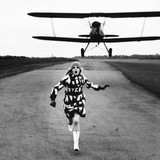
Henri Lievens, cover art of “La Vieille fille blanche et autres contes fantastiques” (The White Old Maid and Other Fantastic Tales) by Nathaniel Hawthorne, Bibliothèque Marabout - Fantastique n° 454, 1973
Open in TelegramÉlectro-Physiologie Photographique, Figure 76, negative 1852–1856; print 1876, Guillaume-Benjamin Duchenne and Adrien Alban Tournachon
Open in TelegramInsofar as the mystery of the ordinary goes, the work [of art] initiates one to another plane, and in this way it constitutes an address, that is to say, a destination. This dimension — which is not that of existence, even though it does not come from an elsewhere or from a world beyond existence, either — leaps forth (se projette) from immanence and into it. It is this fully immanent projection that forms the basis of the question of reflective judgment, in the sense that such a judgment cannot be reduced or compared to objective determinations, that is to say, to objects of determinate and cognitive judgment. The cognitive is never mysterious. The reflective, on the other hand, is the mystery of the extra-ordinary itself, but of an extra-ordinary without transcendence. In this sense, it is the mystery of immanence itself, the becoming-profane of the world. That is to say: its becoming-ordinary — whence the fact that a reflective judgment is only universal by de-fault (par défaut). Its universality — the fact that I posit that everyone should find beautiful, and not merely agreeable, what I find beautiful; that everyone should find extra-ordinary what is also ordinary — is its very mystery, precisely because of the fact that it only imposes itself by de-faulting itself: one will never be able to prove this universality. It will forever remain fundamentally doubtful. Bernard Stiegler, “The Proletarianization of Sensibility”, Bernard Stiegler: Amateur Philosophy. Special issue of boundary 2, vol. 44, no. 1
Open in TelegramPeriod of passionate attitudes of the great hysterial attack, Jean-Martin Charcot, Les Démoniaques Dans L'art
Open in TelegramToday, search engines that make it possible to hierarchise information charge people for being referenced. It's always a question of selection. User profiling consists in identifying your search behaviours so that you can be offered things before it even occurs to you to ask for them. If this doesn't amount to consciousness programming, it's at least Pavlovian conditioning and reinforcement. You are locked into your synchronicity, prevented from changing, in an effort to achieve hypersegmentation, a marketing strategy that consists in identifying marketing micro-niches. Thus behaviours are standardised by reducing them to socio-professional categories or 'tribes' identified by 'markers' that are far more useful for marketing than political society. The media use mass-production consciousness-exploiting technologies by imposing their criteria for retention. The effect of this control of retentional mechanisms where consciousnesses represent a market (the value of an hour of consciousness is equal to the total cost of the ad time divided by the number of viewers, which comes to a few cents) is the homogenisation of secondary retentions. This is one essential cause (but not the only one) of our existential malaise. Control over our retentions implies a loss of identity, which means of difference. Nietzsche clearly saw this loss of the ability to produce difference and the tendency for societies to negate the exception. Our supposedly individualistic societies are in reality completely herd-like. Bernard Stiegler, Philosophising By Accident: Interviews with Élie During
Open in Telegram #Моспродюсер@mosproducerArt3.67K
 Художник Максим Дёмин@mdartandmusicArt3.68K
 Урал Опера Балет@uraloperaballetArt3.66K
 Казанский ТЮЗ (Театр Казань)@kazantuzArt3.66K
 CultureVulture@culture_vulturesArt3.69K
 ✨вересковый мёд✨@mariakrkvArt3.69K
 Музей-театр «Булгаковский дом»@theatre_bulgakovaArt3.69K
 by gosha kartsev@bygoshakartsevArt3.7K