Кабинет
G.O.R.K.I. Talks

G.O.R.K.I. Talks

G.O.R.K.I. (Geopolitical Observatory for Russia's Key Issues) — это центр СПбГУ, образованный 30 марта 2023 года, чтобы объединить академический потенциал первого университета России и богатый практический опыт дипломатической деятельности его экспертов.

Юзернейм
@gorkispbu
Категория
Политика
Страна
РоссияРоссия
Подписчики1 327
Просмотров на пост, 7 дн.796за 7 дней
ERR59,95 %за 7 дней

Средние просмотры поста по дням

По дню публикации

Показать таблицей
ДатаПросмотров на пост
21 нояб. 2026 г.1 380
25 нояб. 2026 г.919
26 нояб. 2026 г.380

Самые просматриваемые за месяц

  1. 01

    From Unlawful Restrictions to Technological Sovereignty: SPbU Experts Discussed Food Security in the EAEU and BRICS   On November 18, 2026, the G.O.R.K.I. Centre at St. Petersburg University hosted an expert round table titled “Food Security as a Geopolitical Tool: From Unlawful Restrictions to the Technological Sovereignty of the EAEU/BRICS.” The discussion brought together leading scholars from SPbU, the Russian Academy of Sciences, and the University associated with the Interparliamentary Assembly of EurAsEC, alongside representatives of regional authorities, agribusiness, and the National Institute for Strategic Initiatives under the President of the Kyrgyz Republic.   Opening the session, Dr. Karin Kneissl, Head of the G.O.R.K.I, noted that food and water resources are moving to the forefront of global politics. According to her assessment, Russia has built an effective model of food autonomy over recent years; however, amid unlawful external restrictions, the key challenge now is achieving technological independence and abandoning the uncritical replication of European agri-food standards and excessive regulatory practices.   Participants examined vulnerable links across the agricultural value chain - ranging from seed production, livestock breeding, and bioresource collections to veterinary pharmaceuticals, microbiological plant protection products, and digital forecasting systems. Experts emphasized the need to reorient state support toward deep raw-material processing, agricultural cooperation, the differentiated reintroduction of fallow land into productive use, and ensuring the real economic affordability of quality nutrition on the domestic market. Summarizing the outcomes of the discussion, SPbU Vice-Rector Viktor Titov underscored the importance of uniting the efforts of the academic community, relevant ministries, and agribusiness to develop technological potential and strengthen food sovereignty, noting that based on the round table’s results, a final analytical brief with practical policy recommendations will be prepared for Russian state authorities as well as EAEU and BRICS integration bodies.   #SPbU #GORKI #FoodSecurity #TechnologicalSovereignty #AgriTech #Geopolitics #AgriculturalPolicy

    Фото
    Просмотры1,38 тыс.
    Пересылки—
    Реакции7
    Комментарии—
  2. 02

    From Gaza to Hormuz: Karin Kneissl Delivered an Open Lecture on the Geopolitics of West Asia at the G.O.R.K.I. Centre, SPbU   On November 19, Dr. Karin Kneissl, Head of the G.O.R.K.I. Centre at Saint-Petersburg University, delivered an open lecture at the Kelkh Mansion titled “From Gaza to Hormuz: West Asia as Central Arena to War and Peace.” Held in English, the event brought together students, researchers, and international relations specialists. Opening the lecture, Dr. Kneissl explained the importance of moving away from the outdated colonial term “Middle East” toward the United Nations designation “West Asia,” emphasizing that every conflict in this region invariably carries a global dimension.   A substantial part of the lecture was devoted to the historical and international legal roots of the Palestinian question. Dr. Kneissl noted that the issue has increasingly been reduced to a purely humanitarian matter, whereas it fundamentally requires a political solution. She examined the legal distinction between a shifting frontier and a demarcated state border, and analyzed the aftermath of the recent Israeli elections, the deepening rift within Israeli society, and the prospects for forming a new coalition cabinet led by former Chief of the General Staff Gadi Eisenkot.   Special attention was paid to the escalating confrontation between the United States, Israel, and Iran, developments in Lebanon, Syria, and Yemen, and the vulnerability of critical global maritime choke points—the Strait of Hormuz and the Bab-el-Mandeb Strait. According to the Head of the G.O.R.K.I. Centre, disruptions to energy transit directly challenge the trust-based economic and investment model of the Arab Gulf states. Dr. Kneissl also highlighted the significance of the trilateral declaration by the leaders of Russia, China, and the United States in Shenzhen calling for stable energy flows and respect for the immunity of state officials, concluding that despite the acute crisis of international institutions, adherence to international law and rigorous Oriental studies remains essential for finding a sustainable exit from protracted conflicts.   #GORKI #SPbU #WestAsia #Geopolitics #InternationalLaw #Gaza #StraitOfHormuz #EnergySecurity #Diplomacy

    Фото
    Просмотры924
    Пересылки—
    Реакции14
    Комментарии—
  3. 03

    From Declarations to Working Institutions: The G.O.R.K.I. Centre at SPbU Discussed the Practical Implementation of the BRICS New Delhi Declaration   On November 20, the G.O.R.K.I. Centre at Saint-Petersburg University (Kelkh Mansion) hosted an expert round table titled “The BRICS New Delhi Declaration: Mechanisms for Integrating Infrastructure, Competencies, and Institutions.” The discussion was moderated by Dr. Karin Kneissl, Head of the G.O.R.K.I. Centre at SPbU, who framed the debate by calling on participants to move away from black-and-white bloc thinking toward flexible diplomacy, a pragmatic language policy, and deeper mutual study of partner nations’ histories and cultures.   Opening the panel presentations, Gyunay Abilova, Director of the BRICS+ International School and Head of the BRICS Education Council, highlighted the systemic gap between Russia’s strategic goal of attracting up to 500,000 international students by 2030 and the continued dominance of Western pre-university standards such as the IB system. As a solution, she presented the concept of a sovereign BRICS+ international educational and corporate ecosystem linking schools, the 182 institutions of the BRICS Network University, and the business community through a unified assessment of transcontinental competencies and cooperation involving ASI, the National Committee on BRICS Research, and the MBA BRICS program. SPbU Professor Stanislav Tkachenko presented an in-depth analysis of the international legal nature of BRICS+, characterizing it as a transcontinental network para-organization operating on consensus and soft law while combining political flexibility and a multi-tiered partner-state framework with targeted institutionalization through the New Development Bank and the Contingent Reserve Arrangement. Georgy Toloraya, Head of the Center for Russian Strategy in Asia at the Institute of Economics of the Russian Academy of Sciences and Executive Director of the National Committee on BRICS Research, analyzed the balance of power in a multipolar world and emphasized that following its expansion, BRICS+ is emerging as a pragmatic coalition of the Global Majority that requires lightweight coordination formats - such as a technical secretariat or a presidential “troika” - to overcome internal asymmetries and translate declarations into practical projects.   During the discussion, which also featured Vitold Yasvin, Head of the Department of Pedagogical Culture and Education Management at MGIMO University and Chairman of the BRICS Pedagogical Council, Anton Ivanov, Research Fellow at the Institute of Oriental Studies of the Russian Academy of Sciences, and SPbU scholars, experts examined pedagogical cooperation, consolidating positions within global financial institutions, and building distributed exchange mechanisms based on national platforms, including the BRICS Grain Exchange project. Speaking at the conclusion of the meeting to summarize the outcomes of the discussion, SPbU Vice-Rector Viktor Titov emphasized the need for a comprehensive examination of the BRICS+ architecture across four dimensions - legal, institutional, economic, and educational - and noted that the conversation moved beyond pure theory to outline concrete operational models ranging from distributed exchange mechanisms to a unified educational and corporate ecosystem. He stated that all proposals voiced at the University will be consolidated into the round table’s final resolution.   #GORKI #SPbU #BRICS #BRICSPlus #GlobalMajority #MultipolarWorld #Education #Diplomacy #NewDelhiDeclaration
    Фото
    Просмотры914
    Пересылки—
    Реакции9
    Комментарии—
  4. 04
    Просмотры675
    Пересылки—
    Реакции8
    Комментарии—

Новые посты

#859Видео

Переслано из Яна Лантратова

Встретились с руководителем Центра «G.O.R.K.I.» СПбГУ Карин Кнайсль и проректором университета Виктором Титовым в Доме прав человека. У нас получился тёплый и откровенный разговор. Пригласила Карин к участию в создании Всемирного объединения правозащитников. Это предложение получило широкую поддержку на Международном форуме омбудсменов. Мы хотим, чтобы правозащитники работали сообща и без двойных стандартов. Обсудили подготовку образовательной программы для молодых правозащитников. Карин много лет преподавала международное гуманитарное право и предложила составить программу занятий и пригласить опытных лекторов. Обучение смогут пройти и наши молодёжные советы. Спасибо Карин за готовность делиться опытом, а Виктору — за конструктивный диалог и открытость к сотрудничеству. Возможность обратиться к опытному наставнику, разобрать конкретную ситуацию поможет молодым правозащитникам увереннее вести эту работу.

Открыть в Telegram
Просмотры85−89%к среднему
Пересылки—
Реакции8
Комментарии—
#856Фото
Просмотры675−15%к среднему
Пересылки—
Реакции8
Комментарии—
#851Фото

From Gaza to Hormuz: Karin Kneissl Delivered an Open Lecture on the Geopolitics of West Asia at the G.O.R.K.I. Centre, SPbU   On November 19, Dr. Karin Kneissl, Head of the G.O.R.K.I. Centre at Saint-Petersburg University, delivered an open lecture at the Kelkh Mansion titled “From Gaza to Hormuz: West Asia as Central Arena to War and Peace.” Held in English, the event brought together students, researchers, and international relations specialists. Opening the lecture, Dr. Kneissl explained the importance of moving away from the outdated colonial term “Middle East” toward the United Nations designation “West Asia,” emphasizing that every conflict in this region invariably carries a global dimension.   A substantial part of the lecture was devoted to the historical and international legal roots of the Palestinian question. Dr. Kneissl noted that the issue has increasingly been reduced to a purely humanitarian matter, whereas it fundamentally requires a political solution. She examined the legal distinction between a shifting frontier and a demarcated state border, and analyzed the aftermath of the recent Israeli elections, the deepening rift within Israeli society, and the prospects for forming a new coalition cabinet led by former Chief of the General Staff Gadi Eisenkot.   Special attention was paid to the escalating confrontation between the United States, Israel, and Iran, developments in Lebanon, Syria, and Yemen, and the vulnerability of critical global maritime choke points—the Strait of Hormuz and the Bab-el-Mandeb Strait. According to the Head of the G.O.R.K.I. Centre, disruptions to energy transit directly challenge the trust-based economic and investment model of the Arab Gulf states. Dr. Kneissl also highlighted the significance of the trilateral declaration by the leaders of Russia, China, and the United States in Shenzhen calling for stable energy flows and respect for the immunity of state officials, concluding that despite the acute crisis of international institutions, adherence to international law and rigorous Oriental studies remains essential for finding a sustainable exit from protracted conflicts.   #GORKI #SPbU #WestAsia #Geopolitics #InternationalLaw #Gaza #StraitOfHormuz #EnergySecurity #Diplomacy

Открыть в Telegram
Просмотры924+16%к среднему
Пересылки—
Реакции14
Комментарии—
#843Фото

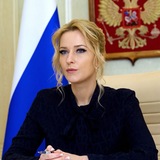
From Declarations to Working Institutions: The G.O.R.K.I. Centre at SPbU Discussed the Practical Implementation of the BRICS New Delhi Declaration   On November 20, the G.O.R.K.I. Centre at Saint-Petersburg University (Kelkh Mansion) hosted an expert round table titled “The BRICS New Delhi Declaration: Mechanisms for Integrating Infrastructure, Competencies, and Institutions.” The discussion was moderated by Dr. Karin Kneissl, Head of the G.O.R.K.I. Centre at SPbU, who framed the debate by calling on participants to move away from black-and-white bloc thinking toward flexible diplomacy, a pragmatic language policy, and deeper mutual study of partner nations’ histories and cultures.   Opening the panel presentations, Gyunay Abilova, Director of the BRICS+ International School and Head of the BRICS Education Council, highlighted the systemic gap between Russia’s strategic goal of attracting up to 500,000 international students by 2030 and the continued dominance of Western pre-university standards such as the IB system. As a solution, she presented the concept of a sovereign BRICS+ international educational and corporate ecosystem linking schools, the 182 institutions of the BRICS Network University, and the business community through a unified assessment of transcontinental competencies and cooperation involving ASI, the National Committee on BRICS Research, and the MBA BRICS program. SPbU Professor Stanislav Tkachenko presented an in-depth analysis of the international legal nature of BRICS+, characterizing it as a transcontinental network para-organization operating on consensus and soft law while combining political flexibility and a multi-tiered partner-state framework with targeted institutionalization through the New Development Bank and the Contingent Reserve Arrangement. Georgy Toloraya, Head of the Center for Russian Strategy in Asia at the Institute of Economics of the Russian Academy of Sciences and Executive Director of the National Committee on BRICS Research, analyzed the balance of power in a multipolar world and emphasized that following its expansion, BRICS+ is emerging as a pragmatic coalition of the Global Majority that requires lightweight coordination formats - such as a technical secretariat or a presidential “troika” - to overcome internal asymmetries and translate declarations into practical projects.   During the discussion, which also featured Vitold Yasvin, Head of the Department of Pedagogical Culture and Education Management at MGIMO University and Chairman of the BRICS Pedagogical Council, Anton Ivanov, Research Fellow at the Institute of Oriental Studies of the Russian Academy of Sciences, and SPbU scholars, experts examined pedagogical cooperation, consolidating positions within global financial institutions, and building distributed exchange mechanisms based on national platforms, including the BRICS Grain Exchange project. Speaking at the conclusion of the meeting to summarize the outcomes of the discussion, SPbU Vice-Rector Viktor Titov emphasized the need for a comprehensive examination of the BRICS+ architecture across four dimensions - legal, institutional, economic, and educational - and noted that the conversation moved beyond pure theory to outline concrete operational models ranging from distributed exchange mechanisms to a unified educational and corporate ecosystem. He stated that all proposals voiced at the University will be consolidated into the round table’s final resolution.   #GORKI #SPbU #BRICS #BRICSPlus #GlobalMajority #MultipolarWorld #Education #Diplomacy #NewDelhiDeclaration
Открыть в Telegram
Просмотры914+15%к среднему
Пересылки—
Реакции9
Комментарии—
#836Фото

From Unlawful Restrictions to Technological Sovereignty: SPbU Experts Discussed Food Security in the EAEU and BRICS   On November 18, 2026, the G.O.R.K.I. Centre at St. Petersburg University hosted an expert round table titled “Food Security as a Geopolitical Tool: From Unlawful Restrictions to the Technological Sovereignty of the EAEU/BRICS.” The discussion brought together leading scholars from SPbU, the Russian Academy of Sciences, and the University associated with the Interparliamentary Assembly of EurAsEC, alongside representatives of regional authorities, agribusiness, and the National Institute for Strategic Initiatives under the President of the Kyrgyz Republic.   Opening the session, Dr. Karin Kneissl, Head of the G.O.R.K.I, noted that food and water resources are moving to the forefront of global politics. According to her assessment, Russia has built an effective model of food autonomy over recent years; however, amid unlawful external restrictions, the key challenge now is achieving technological independence and abandoning the uncritical replication of European agri-food standards and excessive regulatory practices.   Participants examined vulnerable links across the agricultural value chain - ranging from seed production, livestock breeding, and bioresource collections to veterinary pharmaceuticals, microbiological plant protection products, and digital forecasting systems. Experts emphasized the need to reorient state support toward deep raw-material processing, agricultural cooperation, the differentiated reintroduction of fallow land into productive use, and ensuring the real economic affordability of quality nutrition on the domestic market. Summarizing the outcomes of the discussion, SPbU Vice-Rector Viktor Titov underscored the importance of uniting the efforts of the academic community, relevant ministries, and agribusiness to develop technological potential and strengthen food sovereignty, noting that based on the round table’s results, a final analytical brief with practical policy recommendations will be prepared for Russian state authorities as well as EAEU and BRICS integration bodies.   #SPbU #GORKI #FoodSecurity #TechnologicalSovereignty #AgriTech #Geopolitics #AgriculturalPolicy

Открыть в Telegram
Просмотры1 380+73%к среднему
Пересылки—
Реакции7
Комментарии—

Все посты

Связи